Transmission Fluid Change in Pompano Beach: When to Change It and Why It Matters
Your vehicle’s transmission is one of its most important and complex mechanical systems. Whether you drive a car, SUV, pickup truck, or another vehicle, the transmission is responsible for transferring engine power to the wheels while maintaining the appropriate gear ratio for different driving conditions.
To operate correctly, most transmissions depend on specialized fluid that provides lubrication, helps control heat, and supports internal component operation. Over time, transmission fluid can deteriorate, become contaminated, or lose some of the characteristics needed for reliable performance.
For drivers searching for transmission fluid change in Pompano Beach, understanding when to replace transmission fluid and why the service matters can help protect the transmission from unnecessary wear and potentially expensive repairs.
However, transmission maintenance is not identical for every vehicle. Different transmissions require specific fluid types, maintenance intervals, and service procedures. Using the wrong fluid or performing an inappropriate service can create additional problems.
This complete guide explains what transmission fluid does, the warning signs of deteriorated fluid, recommended service intervals, the difference between a transmission fluid change and a transmission flush, factors affecting replacement cost, and why professional transmission maintenance is important for drivers in Pompano Beach and South Florida.
What Is Transmission Fluid?
Transmission fluid is a specialized lubricant designed to support the operation of a vehicle’s transmission.
Its exact functions depend on the transmission design.
In many automatic transmissions, fluid lubricates internal components, helps transfer hydraulic pressure, supports clutch engagement, and carries heat away from moving parts.
Manual transmissions also use lubricants, although the required fluid may differ significantly from conventional automatic transmission fluid.
Continuously variable transmissions and dual-clutch transmissions may have their own specialized fluid requirements.
Because transmission designs vary, manufacturers specify particular fluids that meet the mechanical and operating requirements of each system.
Why Is Transmission Fluid Important?
Transmission fluid performs several critical functions that help maintain smooth and reliable transmission operation.
Lubricating Internal Components
Transmissions contain gears, bearings, shafts, clutches, and other components that operate under mechanical loads.
Proper lubrication reduces friction between moving surfaces and helps control wear.
When fluid deteriorates or becomes contaminated, its ability to protect these components may be reduced.
Helping Control Transmission Temperature
Heat is an important factor in transmission operation.
Many automatic transmissions generate substantial heat during normal driving, especially when operating under heavy loads or in stop-and-go traffic.
Transmission fluid helps carry heat away from internal components so it can be managed through the transmission’s cooling system.
Excessive heat can accelerate fluid deterioration and contribute to component wear.
Supporting Hydraulic Operation
Many automatic transmissions use hydraulic pressure to control gear engagement and internal clutch operation.
Transmission fluid is essential to this process.
Incorrect fluid properties, low fluid levels, or other hydraulic problems can interfere with normal transmission performance.
Supporting Smooth Shifting
Proper transmission operation depends on the correct interaction between mechanical components, electronic controls, and fluid characteristics.
When the fluid is appropriate for the transmission and maintained according to manufacturer recommendations, it helps support predictable shifting behavior.
However, changing transmission fluid cannot repair every shifting problem. Mechanical wear, solenoid faults, sensor problems, and other conditions may require additional diagnosis.
How Does Transmission Fluid Deteriorate?
Transmission fluid operates in a demanding environment.
It is exposed to heat, pressure, friction, and repeated mechanical operation.
Over time, these conditions may change the fluid’s chemical and physical characteristics.
Wear particles and clutch material may also accumulate in the system as components operate.
Some transmissions use filters or screens to help manage contamination, while others have different service designs.
Fluid deterioration does not occur at the same rate in every vehicle.
Driving conditions, transmission design, operating temperatures, maintenance history, and manufacturer specifications all influence service requirements.
When Should You Change Transmission Fluid?
One of the most common questions drivers ask is how often transmission fluid should be changed.
The answer depends on the vehicle.
Some manufacturers specify transmission fluid replacement at particular mileage or time intervals. Others recommend different schedules depending on driving conditions, and certain transmissions have no routine replacement interval under specified operating conditions.
For some vehicles, service recommendations may fall around 30,000 to 60,000 miles, while others may have longer intervals or different requirements. These figures are examples, not universal recommendations.
The most reliable source is the maintenance schedule for your specific vehicle, including any severe-service recommendations that apply to your driving conditions.
Normal Driving Conditions
Normal-service maintenance schedules generally assume the operating conditions defined by the vehicle manufacturer.
If your driving matches those conditions, the standard transmission maintenance schedule may apply.
Severe Driving Conditions
Some manufacturers recommend more frequent transmission service for vehicles operating under demanding conditions.
These may include frequent towing, heavy loads, extensive stop-and-go driving, or other conditions specifically identified in the owner’s manual.
Drivers in Pompano Beach who regularly experience heavy traffic or use their vehicles for demanding work should review whether their driving qualifies for a severe-service schedule.
Signs Your Transmission Fluid May Need Attention
Transmission fluid problems can produce noticeable symptoms, but these warning signs do not automatically mean a fluid change is the correct repair.
Delayed Gear Engagement
If your vehicle takes longer than usual to engage Drive or Reverse, the transmission may have a hydraulic, mechanical, or control-related problem.
Low fluid levels or fluid condition may contribute in some cases.
However, delayed engagement can also indicate internal transmission wear or other faults that require diagnosis.
Rough or Harsh Shifting
A transmission that shifts abruptly, jerks between gears, or behaves differently than usual should be inspected.
Fluid condition is one factor technicians may evaluate.
Other possible causes include electronic control problems, solenoids, internal components, and mechanical wear.
Transmission Slipping
Transmission slipping may feel like the engine speed increases without a corresponding increase in vehicle speed.
This symptom can indicate a serious transmission problem.
Low fluid, hydraulic issues, worn clutches, or other internal conditions may be responsible.
A fluid change alone should not be assumed to resolve slipping.
Unusual Transmission Noises
Whining, humming, grinding, or other unusual noises may indicate transmission or drivetrain problems.
The source should be identified before service is recommended.
A transmission fluid change will not repair damaged gears, bearings, or other mechanical components.
Burning Smell
An unusual burning smell may indicate overheated fluid or another mechanical issue.
If the transmission is overheating, simply replacing the fluid without identifying the cause may allow the problem to continue.
Professional inspection is recommended.
Transmission Fluid Leaks
Transmission fluid leaking from seals, gaskets, cooler lines, or other components can eventually result in an insufficient fluid level.
Low fluid may interfere with lubrication and hydraulic operation.
If you notice a new fluid leak beneath your vehicle, have it inspected promptly.
The location and appearance of the fluid alone may not be enough to identify its source.
What Color Should Transmission Fluid Be?
Transmission fluid color varies by manufacturer and fluid formulation.
Many automatic transmission fluids are red or reddish when new, but other fluids may be amber, green, blue, or another color.
Fluid may darken during normal operation.
Color alone is not a reliable way to determine whether transmission fluid must be replaced.
A technician should consider the manufacturer’s maintenance schedule, fluid condition, contamination, symptoms, and transmission design.
A strong burnt odor, significant debris, or other abnormal findings may justify further investigation.
Transmission Fluid Change vs. Transmission Flush
Drivers often encounter two terms when researching transmission maintenance: transmission fluid change and transmission flush.
Although both involve transmission fluid service, they are not necessarily the same procedure.
What Is a Transmission Fluid Change?
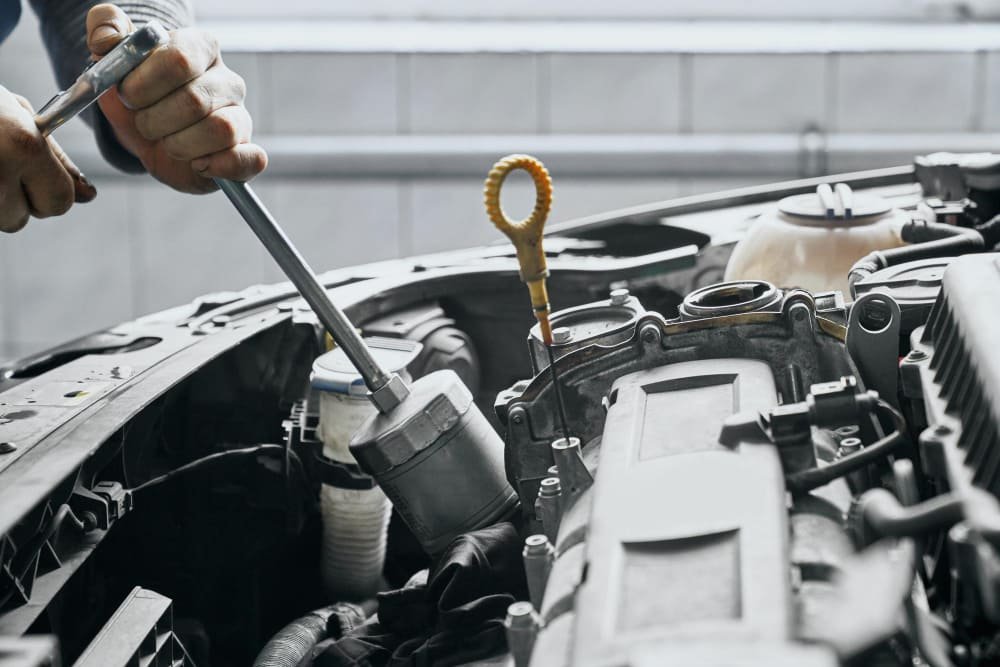
A conventional transmission fluid change generally involves draining the fluid that can be removed through the manufacturer’s service procedure and refilling the transmission with the specified fluid.
Depending on the vehicle, the service may also involve removing the transmission pan, cleaning accessible components, replacing a filter, or installing a new gasket.
Not all transmission fluid is necessarily removed during a standard drain-and-fill procedure.
The exact amount depends on transmission design.
What Is a Transmission Flush?
A transmission flush typically refers to a procedure intended to exchange a larger portion of the fluid circulating through the system.
The equipment and method can vary.
Not every manufacturer recommends every type of flushing procedure, and certain transmissions have specific restrictions or requirements.
A flush should not automatically be considered better than a conventional fluid change.
The appropriate service should follow manufacturer guidance and take the transmission’s condition into account.
Which Service Is Better?
Neither procedure is universally better for every vehicle.
For some transmissions, a manufacturer-approved drain-and-fill service is appropriate.
For others, specific fluid exchange procedures may be permitted.
The correct decision depends on vehicle design, manufacturer instructions, service history, and transmission condition.
A qualified mechanic should explain the recommended procedure before performing the service.
Can Changing Transmission Fluid Fix Shifting Problems?
Sometimes fluid-related conditions contribute to abnormal shifting, but a fluid change is not a universal repair.
If the fluid is incorrect, degraded, contaminated, or at an improper level, correcting that condition may improve operation in certain circumstances.
However, worn internal clutches, damaged components, failing solenoids, control module problems, and other mechanical faults cannot necessarily be corrected by replacing fluid.
If your transmission is already slipping, shifting harshly, or displaying warning messages, diagnostic testing should come before routine maintenance.
Is It Safe to Change Transmission Fluid on a High-Mileage Vehicle?
High mileage alone does not automatically mean transmission fluid should never be changed.
However, a high-mileage transmission with an unknown maintenance history, significant slipping, or other existing problems should be evaluated carefully.
A transmission that is already severely worn may continue to exhibit problems even after fluid service.
A fluid change cannot reverse mechanical damage that has already occurred.
The safest approach is to review the vehicle’s maintenance history, inspect the transmission’s condition, and follow the manufacturer’s service procedures.
What Happens If You Never Change Transmission Fluid?
Ignoring manufacturer-recommended transmission maintenance can allow fluid deterioration and contamination to progress.
Depending on transmission design and operating conditions, this may contribute to increased wear, heat-related problems, or reduced performance.
Over time, neglected maintenance can increase the likelihood of costly repairs.
However, not every transmission requires fluid replacement at the same interval, and some have different manufacturer maintenance strategies.
The important principle is to follow the correct schedule for your specific vehicle rather than assuming that all transmissions require identical service.
Why Transmission Fluid Maintenance Matters in Pompano Beach
Pompano Beach drivers regularly experience warm temperatures, urban traffic, highway commuting, and frequent stop-and-go driving.
These conditions can place varying demands on a vehicle’s transmission.
In heavy traffic, an automatic transmission may experience repeated gear changes, torque converter activity, and heat generation.
Vehicles used for towing, commercial work, or frequent heavy loads may experience additional demands.
South Florida’s climate does not automatically require every driver to change transmission fluid more frequently, but it makes following the manufacturer’s maintenance schedule and monitoring transmission performance especially important.
Does Hot Weather Affect Transmission Fluid?
Heat is an important factor in transmission fluid aging.
Higher operating temperatures can accelerate certain chemical changes in lubricants.
However, the actual transmission fluid temperature depends on many factors, including transmission design, cooling system performance, vehicle load, and driving conditions.
A properly functioning transmission is engineered to operate within its intended temperature range.
If overheating occurs, the cause should be diagnosed rather than assuming that frequent fluid changes alone will solve the problem.
How Is Transmission Fluid Changed Professionally?
Professional transmission fluid service begins by identifying the vehicle’s transmission type and the manufacturer’s requirements.
The technician determines the correct fluid specification, capacity, service procedure, and any applicable filter or gasket requirements.
Depending on the transmission, the service may involve draining fluid through a drain plug, removing a pan, or following another manufacturer-approved procedure.
The transmission is then refilled using the correct fluid.
Certain transmissions require specific fluid temperature ranges, scan-tool information, or specialized procedures to verify the proper fluid level.
After service, the technician may inspect for leaks and verify normal transmission operation.
Following the correct procedure is essential because both insufficient and excessive fluid levels can create problems in some transmissions.
Why Using the Correct Transmission Fluid Matters
Transmission fluids are not universally interchangeable.
Automatic transmissions, CVTs, dual-clutch transmissions, and manual transmissions may require different fluid formulations.
Even two conventional automatic transmissions may have different manufacturer specifications.
Using an incompatible fluid can interfere with clutch operation, shifting behavior, lubrication, or other transmission functions.
A professional repair shop should confirm the correct specification rather than selecting fluid based only on its color or general category.
Automatic Transmission Fluid vs. CVT Fluid
Conventional automatic transmissions and continuously variable transmissions operate differently.
A traditional automatic transmission generally uses sets of gears and clutch systems to provide different ratios.
A CVT commonly uses a variable-ratio mechanism that may involve a belt or chain and pulleys, depending on design.
These systems often require fluids with different friction and lubrication characteristics.
Using conventional automatic transmission fluid in a CVT that requires specialized CVT fluid can cause serious problems.
Always follow the manufacturer’s exact fluid specification.
Do Manual Transmissions Need Fluid Changes?
Yes, manual transmissions also require appropriate lubrication.
However, maintenance requirements vary by vehicle.
Some manual transmissions use gear oil, while others require specialized transmission fluids.
The fluid helps lubricate gears, bearings, synchronizers, and other internal components.
Drivers should follow the manufacturer’s recommended service schedule and fluid specifications.
Can Low Transmission Fluid Damage the Transmission?
Yes.
In transmissions that rely on fluid for hydraulic operation and lubrication, an insufficient fluid level can interfere with normal performance.
Low fluid may contribute to slipping, delayed engagement, overheating, or inadequate lubrication.
Continuing to operate a transmission with significantly insufficient fluid can increase the risk of damage.
If a leak is suspected, the source should be identified and repaired.
Simply adding fluid without addressing the underlying leak may not provide a lasting solution.
How Much Does a Transmission Fluid Change Cost in Pompano Beach?
The cost of transmission fluid change in Pompano Beach depends on the vehicle, transmission type, fluid specification, quantity required, labor, and service procedure.
A straightforward drain-and-fill service may differ significantly from a procedure involving transmission pan removal, filter replacement, specialized fluid, or additional diagnostic work.
CVT and dual-clutch transmission services may also have different requirements.
Some vehicles require specialized tools or procedures to check the fluid level accurately.
Because of these differences, a vehicle-specific estimate provides more useful information than a universal transmission fluid change price.
Transmission Fluid Change vs. Transmission Repair
Routine transmission maintenance and transmission repair are different services.
A transmission fluid change is generally performed to maintain the fluid according to manufacturer recommendations.
Transmission repair addresses a diagnosed mechanical, hydraulic, electrical, or electronic fault.
If the transmission is operating normally and maintenance is due, fluid replacement may be appropriate.
If the vehicle is slipping, shifting unpredictably, overheating, or making unusual noises, diagnosis should determine whether maintenance or repair is necessary.
Performing a fluid change without evaluating an existing transmission problem may delay the repair the vehicle actually needs.
How to Help Extend Transmission Life
Proper transmission maintenance begins with following the manufacturer’s service recommendations.
Use only the specified transmission fluid and have leaks addressed promptly.
Pay attention to changes in shifting behavior, unusual noises, warning lights, or delayed gear engagement.
If your vehicle is regularly used for towing or other demanding activities, review the manufacturer’s severe-service recommendations.
Maintaining the engine cooling system and any transmission cooling components is also important because temperature management contributes to transmission reliability.
Preventive maintenance cannot eliminate every possible failure, but it can help reduce avoidable wear and identify developing problems.
Choosing Transmission Fluid Change in Pompano Beach
When searching for transmission fluid change near me, transmission service in Pompano Beach, or a mechanic for transmission maintenance, choose a shop that understands different transmission designs and manufacturer requirements.
The technician should verify the correct fluid specification and service procedure for your vehicle.
If shifting problems are present, the shop should evaluate the symptoms before recommending a routine fluid change.
Clear communication is also important.
You should understand what service is being performed, whether the transmission filter requires attention, which fluid specification is needed, and whether any additional concerns were identified.
Why Choose TS AutoCar for Transmission Fluid Service in Pompano Beach?
TS AutoCar provides professional automotive diagnostics and repair for drivers throughout Pompano Beach.
With more than 20 years of automotive experience, our team understands that proper vehicle maintenance requires attention to manufacturer specifications and the condition of individual components.
Transmission problems can involve fluid condition, leaks, electronic controls, internal wear, or other mechanical issues.
Rather than assuming every shifting complaint can be corrected through a fluid change, we focus on identifying the actual condition of the vehicle and recommending the appropriate service.
Our approach emphasizes accurate diagnostics, transparent communication, honest recommendations, and quality workmanship.
For drivers searching for transmission fluid change in Pompano Beach, TS AutoCar can help evaluate transmission maintenance needs and determine the appropriate next steps for reliable vehicle operation.
Schedule Transmission Fluid Change in Pompano Beach
If your vehicle is due for transmission maintenance or you have noticed changes in shifting performance, scheduling an inspection can help determine the appropriate service.
Transmission fluid plays an important role in lubrication, hydraulic operation, and temperature management.
However, the correct fluid and service procedure depend on the specific transmission.
Contact TS AutoCar to discuss transmission fluid change in Pompano Beach, transmission maintenance, and professional automotive diagnostics. Proper service can help support smooth operation and reduce the risk of avoidable transmission problems.
Frequently Asked Questions About Transmission Fluid Changes
How often should transmission fluid be changed?
Transmission fluid replacement intervals vary by manufacturer and transmission type. Some vehicles have schedules around 30,000 to 60,000 miles, while others have longer intervals or different requirements. Always follow your vehicle’s maintenance schedule.
What are the signs that transmission fluid needs changing?
Possible warning signs include unusual shifting, delayed engagement, slipping, overheating, abnormal fluid condition, or transmission-related noises. These symptoms may also indicate mechanical problems that require diagnosis rather than a fluid change alone.
Is a transmission fluid change the same as a transmission flush?
No. A conventional fluid change typically removes the fluid accessible through the manufacturer’s drain procedure, while a flush or exchange may replace a larger portion of the fluid. The appropriate procedure depends on manufacturer recommendations.
Can changing transmission fluid improve shifting?
It may help when a fluid-related condition is responsible for abnormal shifting. However, fluid replacement cannot repair worn internal components or every electrical and hydraulic problem.
Is it bad to change transmission fluid on a high-mileage car?
Not automatically. The decision should consider manufacturer recommendations, maintenance history, fluid condition, and whether the transmission already has significant mechanical problems.
What happens if transmission fluid is never changed?
If the manufacturer requires periodic fluid replacement, neglecting that maintenance can allow fluid deterioration and contamination to contribute to wear and performance problems.
Can low transmission fluid cause slipping?
Yes. In certain transmissions, low fluid can reduce hydraulic pressure or interfere with proper operation, potentially contributing to slipping or delayed engagement.
Do CVT transmissions need special fluid?
Yes. Many CVTs require fluid specifically formulated for their design. Conventional automatic transmission fluid should not be substituted unless explicitly approved by the manufacturer.
How much does a transmission fluid change cost in Pompano Beach?
Pricing depends on transmission type, fluid specification, required quantity, labor, and whether filters, gaskets, or additional services are involved. A vehicle-specific estimate is the most accurate approach.
Where can I get a transmission fluid change in Pompano Beach?
Drivers can contact a qualified local automotive repair shop such as TS AutoCar to discuss transmission maintenance, evaluate fluid service requirements, and determine whether additional diagnostics are necessary.
Conclusion
Transmission fluid is essential to the operation of many vehicle transmission systems. It helps lubricate internal components, manage heat, and support the hydraulic functions required for smooth and reliable shifting.
Over time, fluid may deteriorate or become contaminated, making manufacturer-recommended maintenance important for long-term transmission reliability.
However, transmission fluid replacement is not identical for every vehicle. Different transmission designs require specific fluids, procedures, and maintenance schedules.
For drivers searching for transmission fluid change in Pompano Beach, the most important step is ensuring that the service is appropriate for the vehicle and performed according to manufacturer requirements.
TS AutoCar provides professional automotive diagnostics and repair in Pompano Beach with a focus on accurate evaluation, transparent recommendations, and dependable workmanship. Whether your vehicle is due for scheduled transmission maintenance or experiencing unusual shifting behavior, addressing the issue early can help support reliable performance and avoid unnecessary repairs.