Timing Belt Replacement in Pompano Beach: Warning Signs, Cost and When to Replace It
The timing belt is one of the most important components inside many vehicle engines, yet it is also one of the easiest maintenance items to overlook. Unlike worn brakes, weak batteries, or suspension problems, a timing belt may provide few obvious symptoms before it becomes dangerously worn. If it breaks while the engine is running, the result can range from an inconvenient breakdown to severe internal engine damage.
For drivers searching for timing belt replacement in Pompano Beach, understanding when the timing belt should be replaced is an important part of preventive vehicle maintenance. Following the correct replacement interval can help protect your engine, reduce the risk of unexpected breakdowns, and potentially save thousands of dollars in repairs.
This complete guide explains what a timing belt does, common warning signs of timing belt problems, how often replacement may be necessary, what affects timing belt replacement cost, and why professional inspection is especially important as your vehicle accumulates mileage.
What Is a Timing Belt?
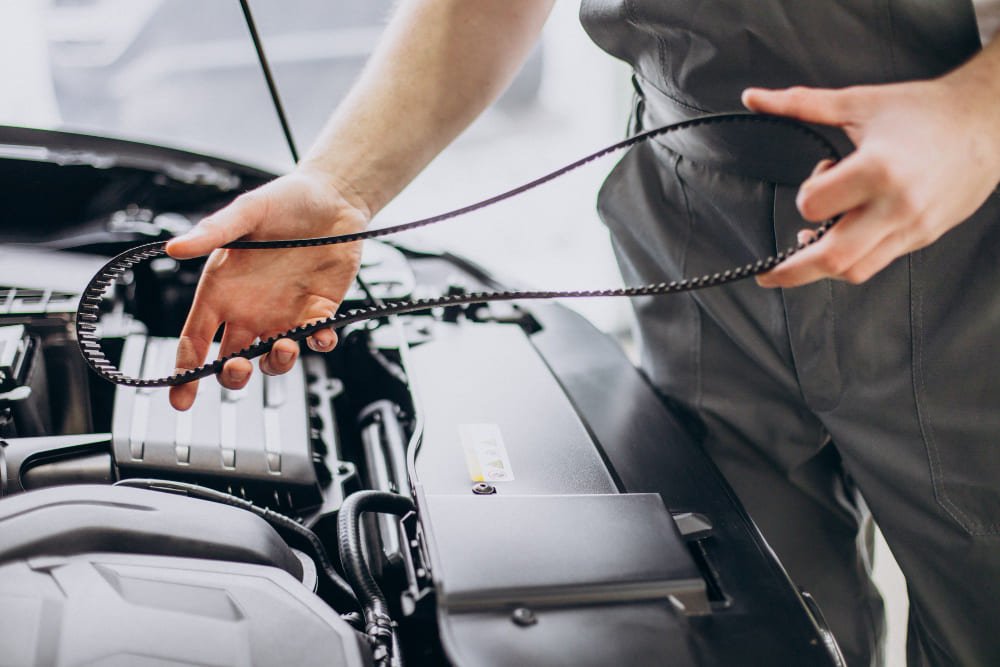
A timing belt is a reinforced rubber belt that synchronizes the movement of critical internal engine components. Its primary job is to keep the crankshaft and camshaft operating in the correct relationship.
The crankshaft controls the movement of the pistons, while the camshaft controls the opening and closing of the engine’s valves. These components must remain precisely synchronized for the engine to operate correctly.
The timing belt contains teeth that engage with gears or sprockets attached to these components. As the engine runs, the belt ensures that the valves open and close at exactly the correct time relative to piston movement.
Even a small timing error can negatively affect engine operation. If the timing belt breaks completely, the crankshaft and camshaft can lose synchronization immediately.
Why Timing Belt Replacement Is So Important
Timing belts are designed to operate reliably for tens of thousands of miles, but they are not designed to last forever.
Heat, age, mileage, tension, and repeated engine operation gradually weaken the belt material. Eventually, the belt can develop cracks, worn teeth, frayed edges, or structural deterioration.
The biggest concern is that timing belt failure may occur suddenly.
In some engines, particularly interference engines, the pistons and valves occupy some of the same physical space inside the combustion chamber at different moments. Proper timing prevents them from making contact.
If the timing belt breaks, the valves may stop moving in synchronization while the pistons continue moving. This can cause piston-to-valve contact, potentially resulting in bent valves, damaged pistons, cylinder head damage, or other serious internal engine problems.
Replacing the timing belt according to the manufacturer’s maintenance schedule is significantly less expensive than repairing an engine damaged by a broken belt.
Warning Signs of a Failing Timing Belt
A worn timing belt does not always produce obvious symptoms. This is why scheduled replacement is so important. However, certain warning signs may indicate a problem with the timing belt or related timing system components.
Ticking or Unusual Engine Noise
Unusual ticking, clicking, or repetitive noises from the engine may indicate a problem within the timing system.
These sounds can have many different causes, so they should not automatically be blamed on the timing belt. Problems with tensioners, pulleys, lubrication, or other engine components can produce similar noises.
If your engine develops a new or unexplained sound, a professional inspection can determine whether the timing system requires attention.
Engine Misfires or Rough Performance
If the timing belt becomes excessively worn or jumps one or more teeth, engine timing may become incorrect.
This can interfere with combustion and lead to rough engine operation, misfires, hesitation, reduced power, or poor acceleration.
Because these symptoms can also be caused by spark plugs, ignition coils, fuel delivery problems, sensors, and many other issues, professional diagnostics are essential.
Difficulty Starting the Engine
A timing problem can make an engine difficult or impossible to start.
If the belt has broken, the camshaft may no longer rotate correctly when the starter cranks the engine. The engine may sound noticeably different while cranking because normal compression and valve operation have been disrupted.
If you suspect a broken timing belt, avoid repeatedly attempting to start the vehicle. Additional cranking may increase the risk of internal damage in certain engines.
Oil Leaks Near the Timing Cover
Oil leaking around the front of the engine or timing cover area should be inspected.
A leak may originate from seals located near the timing system. Oil contamination can also negatively affect certain timing belt materials and surrounding components.
Repairing oil leaks promptly helps protect the timing system and other engine components.
Engine Will Not Start
A completely broken timing belt can prevent the engine from starting.
The starter motor may still turn the engine, but the internal components will no longer operate with the synchronization required for combustion.
A no-start condition has many possible causes, including battery, starter, fuel, ignition, electrical, and sensor problems. Proper diagnosis is necessary to confirm timing belt failure.
Can a Timing Belt Break Without Warning?
Yes. This is one of the primary reasons timing belt maintenance should be based on the manufacturer’s recommended replacement interval rather than waiting for symptoms.
Some timing belts may show visible deterioration before failure, while others can appear relatively normal externally even though the internal structure has weakened.
Because the timing belt is usually located behind protective covers, drivers cannot easily inspect it during routine checks.
If your vehicle is approaching the manufacturer’s recommended timing belt replacement interval, waiting for warning signs can be risky.
When Should You Replace Your Timing Belt?
There is no universal timing belt replacement interval for every vehicle.
Depending on the manufacturer and engine design, recommended replacement intervals can vary significantly. Some vehicles may call for timing belt service around 60,000 miles, while others may have intervals closer to 90,000, 100,000 miles, or beyond.
Time can matter as well as mileage. A vehicle driven relatively few miles may still have an aging timing belt because rubber components naturally deteriorate over the years.
The most reliable source is the maintenance schedule provided by the vehicle manufacturer.
If you recently purchased a used vehicle and do not have documentation showing when the timing belt was last replaced, having the timing system evaluated can help determine the appropriate next step.
Timing Belt Replacement Based on Mileage vs. Age
Many drivers assume that low annual mileage means timing belt replacement can always be postponed. That is not necessarily true.
Timing belts are manufactured using rubber and reinforcing materials that are exposed to engine heat and environmental conditions. These materials can deteriorate with age even when mileage remains relatively low.
A vehicle that is ten years old with moderate mileage may still require timing belt service depending on manufacturer recommendations.
This is why maintenance decisions should consider both vehicle age and mileage.
Timing Belt vs. Timing Chain
Not every vehicle uses a timing belt.
Some engines use a timing chain, which performs essentially the same synchronization function but is constructed from metal rather than reinforced rubber.
Timing chains are generally designed to last significantly longer and often do not have the same scheduled replacement interval as timing belts. However, chains, guides, tensioners, and related components can still wear or fail.
If you are unsure whether your vehicle has a timing belt or timing chain, your owner’s manual, manufacturer maintenance information, or a professional technician can confirm the engine design.
This distinction is important because maintenance requirements can be very different.
What Causes Timing Belts to Fail?
Timing belt failure can occur for several reasons.
Normal Age and Mileage
The most common cause is normal deterioration.
Every engine cycle places stress on the timing belt. Over thousands of miles and years of operation, the belt material gradually loses strength and flexibility.
Eventually, cracks or internal structural damage may develop.
Failed Tensioner or Pulley
The timing belt relies on tensioners and pulleys to maintain proper tension and alignment.
A failing bearing, tensioner, or pulley can cause excessive belt movement, uneven wear, noise, or complete timing system failure.
For this reason, timing belt service often includes replacement of related components rather than the belt alone.
Oil or Coolant Contamination
Engine fluids can damage timing belt materials.
Oil leaks from camshaft seals, crankshaft seals, or other nearby components may contaminate the belt. Coolant leaks can create similar problems depending on engine design.
If contamination is discovered during timing belt service, the source of the leak should be addressed.
Incorrect Installation
Timing belt installation requires precision.
The crankshaft and camshaft must remain correctly aligned, and belt tension must meet manufacturer specifications.
Incorrect installation can cause poor engine performance or severe internal damage. Timing belt replacement should therefore be performed by technicians familiar with the specific engine.
What Happens During Timing Belt Replacement?
Professional timing belt replacement is a detailed service that can require significant engine disassembly.
The technician begins by accessing the timing system, which may require removing engine covers, accessory belts, engine mounts, pulleys, or other components depending on the vehicle.
The crankshaft and camshaft are positioned according to manufacturer specifications before the old timing belt is removed.
The technician then inspects related components, including tensioners, idler pulleys, seals, and other parts located within the timing system.
The new belt is installed with precise alignment and proper tension. Once installation is complete, the engine timing is verified before the vehicle is returned to service.
Because incorrect timing can damage the engine, accuracy is critical throughout the process.
Should the Water Pump Be Replaced With the Timing Belt?
On many vehicles, the water pump is located behind the timing cover and may be driven by the timing belt.
When this is the case, replacing the water pump during timing belt service may be recommended, particularly if the pump is approaching the expected end of its service life.
The reason is largely related to labor.
Accessing the water pump later may require removing many of the same components that were already removed during timing belt replacement. Replacing both components during the same service can potentially prevent paying for overlapping labor twice.
However, this recommendation depends on the specific engine design and manufacturer procedures.
A professional technician should determine whether water pump replacement is appropriate for your vehicle.
What Else Should Be Replaced During Timing Belt Service?
Depending on the vehicle, timing belt service may include more than the belt itself.
Tensioners, idler pulleys, seals, and water pumps are commonly evaluated because failure of any component within the timing system can affect the new belt.
Installing a new timing belt while leaving a worn tensioner or failing pulley in place may increase the risk of premature failure.
The correct approach depends on the vehicle manufacturer’s specifications and the condition of each component.
Timing Belt Replacement Cost in Pompano Beach
The cost of timing belt replacement in Pompano Beach varies considerably depending on vehicle make, model, engine configuration, labor requirements, replacement parts, and whether additional components are serviced at the same time.
Timing belt replacement is generally more labor-intensive than routine services such as oil changes or spark plug replacement because technicians must access internal areas of the engine and maintain precise timing alignment.
Some engines provide relatively straightforward access, while others require several hours of disassembly and reassembly.
The total cost may also increase if the water pump, tensioners, pulleys, seals, or leaking components require replacement.
For these reasons, a vehicle-specific estimate is more accurate than relying on a generic timing belt replacement price.
Why Preventive Timing Belt Replacement Can Save Money
Timing belt replacement can represent a significant maintenance expense, which sometimes causes drivers to postpone the service.
However, the cost should be compared with the potential consequences of belt failure.
If a timing belt breaks in an interference engine, repairs may involve removing the cylinder head, replacing damaged valves, repairing pistons, or rebuilding significant portions of the engine.
In severe cases, engine replacement may become more practical than repairing the damage.
Preventive timing belt replacement is designed to avoid this type of failure.
Can You Drive With a Worn Timing Belt?
Driving beyond the recommended timing belt service interval increases risk because there is no reliable way to predict exactly when an aging belt will fail.
A vehicle may continue running normally until the moment the belt breaks.
If your vehicle has exceeded its recommended timing belt replacement interval, scheduling service is generally safer than waiting for symptoms.
If the engine develops timing-related noises, severe performance problems, or a suspected belt failure, avoid driving until the vehicle has been professionally inspected.
Why Timing Belt Maintenance Matters in Pompano Beach
Vehicles in Pompano Beach operate in a hot South Florida environment where engine compartments are routinely exposed to high temperatures.
Timing belts are engineered to tolerate engine heat, but age and thermal cycling contribute to normal material deterioration over time.
Heavy traffic can also increase total engine operating time even when vehicle mileage accumulates slowly.
For Pompano Beach drivers, following manufacturer maintenance schedules and having aging vehicles inspected regularly can help reduce the risk of unexpected timing system problems.
How to Know If Your Timing Belt Has Already Been Replaced
When purchasing a used vehicle, determining timing belt history is extremely important.
Check maintenance records, service invoices, vehicle history documentation, or stickers that may have been placed in the engine compartment during previous service.
Do not rely solely on visual appearance. A belt may look acceptable externally while still being old or internally weakened.
If there is no reliable documentation and the vehicle is near or beyond the manufacturer’s recommended replacement interval, consult a qualified mechanic about the safest maintenance approach.
Choosing a Timing Belt Replacement Service in Pompano Beach
Timing belt replacement requires experience, precision, and knowledge of manufacturer-specific procedures.
When searching for timing belt replacement in Pompano Beach, choose an auto repair shop that performs a complete inspection, uses parts that meet the appropriate specifications, and explains which related components should be replaced and why.
Clear communication is particularly important because timing belt service can involve water pumps, tensioners, pulleys, seals, and other components.
A reputable shop should provide a detailed estimate before beginning work and explain the difference between necessary repairs and preventive recommendations.
Why Choose TS AutoCar for Timing Belt Replacement in Pompano Beach?
TS AutoCar is built around professional automotive experience, transparent recommendations, and high-quality workmanship.
With more than 20 years of automotive experience, our team understands the importance of performing timing belt service correctly. Timing systems require precision, and every component must be inspected carefully to help ensure reliable engine operation after the repair.
We believe customers should understand what their vehicle needs before work begins. Our team explains the condition of the timing system, recommended replacement components, and the reasons behind each service recommendation.
Whether your vehicle is approaching its scheduled timing belt interval or you are concerned about possible timing system problems, TS AutoCar provides professional automotive service for drivers in Pompano Beach and surrounding South Florida communities.
Schedule Timing Belt Replacement in Pompano Beach
Waiting for a timing belt to break can turn preventive maintenance into a major engine repair.
If your vehicle is approaching its manufacturer’s recommended timing belt replacement interval, has an unknown maintenance history, or is showing symptoms that may be related to the timing system, schedule a professional inspection.
Contact TS AutoCar for timing belt replacement in Pompano Beach and get clear information about your vehicle’s timing system, recommended maintenance, and available repair options.
Frequently Asked Questions About Timing Belt Replacement
How often should a timing belt be replaced?
Timing belt replacement intervals vary by manufacturer and engine. Some vehicles may require service around 60,000 miles, while others may have intervals of 90,000, 100,000 miles, or more. Vehicle age may also be relevant. Always consult the manufacturer’s maintenance schedule for your specific vehicle.
What are the warning signs of a bad timing belt?
Possible symptoms include unusual engine noises, rough operation, misfires, difficulty starting, oil leaks near the timing cover, or a no-start condition. However, a timing belt can sometimes fail without noticeable warning signs.
What happens if the timing belt breaks while driving?
The engine will stop running. In an interference engine, the pistons may contact open valves, potentially causing serious internal engine damage. The extent of damage depends on the engine design and circumstances of the failure.
Is a timing belt the same as a serpentine belt?
No. The timing belt synchronizes internal engine components. The serpentine belt drives external accessories such as the alternator and, depending on the vehicle, the air conditioning compressor, power steering pump, or water pump.
Should I replace the water pump with the timing belt?
It may be recommended when the water pump is located within the timing system or driven by the timing belt. Replacing it during timing belt service can sometimes reduce future overlapping labor. The appropriate recommendation depends on the specific vehicle.
How do I know whether my car has a timing belt or timing chain?
Check your owner’s manual or manufacturer information, or ask a professional technician. Engine design determines whether your vehicle uses a timing belt or timing chain.
Is timing belt replacement expensive?
The cost varies significantly because labor requirements and parts differ by vehicle. Additional components such as tensioners, pulleys, seals, and water pumps can also affect the final price. A vehicle-specific estimate is the most accurate way to determine cost.
Conclusion
Timing belt replacement is one of the most important preventive maintenance services for vehicles equipped with a timing belt. The belt keeps critical internal engine components synchronized, and failure can result in anything from an unexpected breakdown to severe engine damage.
The safest approach is not to wait for obvious warning signs. Following the manufacturer’s recommended timing belt replacement interval, considering both mileage and vehicle age, and maintaining accurate service records can significantly reduce the risk of failure.
For drivers looking for timing belt replacement in Pompano Beach, professional inspection and proper installation are essential. TS AutoCar provides experienced automotive service, transparent recommendations, and careful attention to the components that protect your engine’s long-term reliability.