
Car Shaking While Driving or Idling: Common Causes and When to See a Mechanic in Pompano Beach
A car that shakes, vibrates, or feels unstable while driving can be more than an uncomfortable experience. Sometimes the cause is relatively simple, such as an unbalanced tire. In other situations, shaking may indicate an engine misfire, worn suspension component, brake problem, or another mechanical issue that requires prompt attention.
The most important clue is often when the vibration occurs. A vehicle that shakes while idling may have a very different problem from one that vibrates at highway speeds or only when braking. Understanding these differences can help you describe the symptoms accurately and know when to schedule professional diagnostics.
For drivers searching for car shaking repair in Pompano Beach, this guide explains the most common causes of vehicle vibration, how to distinguish engine-related shaking from tire and suspension problems, what warning signs require immediate attention, and how a qualified mechanic can identify the underlying issue.
Why Is My Car Shaking?
A vehicle contains many moving components that must operate smoothly and in balance. The engine produces power, the transmission transfers that power, the wheels rotate, and the suspension keeps the tires in contact with the road.
When one of these systems develops a problem, vibration can travel through the steering wheel, seat, floor, or entire vehicle.
The location, speed, and timing of the shaking provide valuable diagnostic information. For example, a vibration that increases with road speed often suggests a wheel or tire-related issue, while shaking that occurs when the vehicle is stopped may point toward the engine or its mounts.
However, symptoms alone cannot confirm the cause. Several different problems can produce similar vibrations, which is why professional inspection is important.
Car Shaking While Idling: Common Causes
If your car shakes while stopped at a traffic light or sitting in Park, the problem is more likely to involve engine operation or the components that support the engine.
Worn Spark Plugs or Ignition Coils
Spark plugs and ignition coils are responsible for creating the spark needed for combustion in gasoline engines.
When a spark plug becomes worn or an ignition coil fails, one or more cylinders may not fire correctly. This can create an engine misfire, causing the vehicle to shake or idle roughly.
You may also notice hesitation, reduced acceleration, poor fuel economy, or a check engine light.
A professional diagnostic test can determine whether the ignition system is responsible rather than replacing spark plugs or coils based only on symptoms.
Engine Misfires
An engine misfire occurs when combustion does not happen correctly in one or more cylinders.
Misfires can be caused by ignition problems, fuel delivery issues, air leaks, compression problems, or engine management faults.
When the engine is idling, even a small imbalance in combustion may become noticeable because the engine is operating at a relatively low speed.
If the check engine light is flashing, the vehicle should be inspected promptly. Continued driving with a severe misfire can potentially damage the catalytic converter.
Worn or Damaged Engine Mounts
Engine mounts secure the engine to the vehicle’s structure while helping absorb normal engine vibration.
As mounts age, their rubber or hydraulic components may deteriorate. When they can no longer isolate vibration effectively, shaking may become more noticeable inside the cabin.
A worn engine mount may cause vibration while idling, especially when the transmission is placed in Drive or Reverse.
Some drivers also notice a clunk when accelerating or shifting gears.
Because engine mounts do not cause combustion problems, a technician should distinguish between normal engine vibration being transmitted through a damaged mount and an engine that is actually running poorly.
Fuel Injector Problems
Fuel injectors deliver precisely controlled amounts of fuel into the engine.
If an injector becomes restricted, malfunctions, or delivers fuel incorrectly, the affected cylinder may not operate as intended.
This can contribute to rough idling, hesitation, misfires, and reduced engine performance.
Fuel injector problems should be diagnosed using appropriate testing rather than assuming that every rough idle requires injector cleaning.
Vacuum Leaks or Air Intake Problems
Modern engines rely on carefully controlled airflow.
A vacuum leak or an air intake problem can allow unmetered air into the engine, potentially disrupting the air-fuel mixture and causing rough idle or hesitation.
Depending on the vehicle, possible causes may include damaged hoses, intake leaks, or other air management components.
Diagnostic testing can help identify whether the engine is receiving the correct amount of air and fuel.
Car Shaking While Driving: Common Causes
When vibration occurs primarily while the vehicle is moving, tires, wheels, suspension, steering, and drivetrain components become important areas to inspect.
Unbalanced Tires
Tire imbalance is one of the most common causes of vibration at certain road speeds.
Even a small difference in weight distribution around a tire and wheel assembly can create vibration as the wheel rotates.
Drivers often notice the shaking at highway speeds, sometimes through the steering wheel or seat.
Professional wheel balancing can correct many imbalance problems, but the tires should also be inspected for damage, irregular wear, and other issues.
Uneven Tire Wear
Tires that wear unevenly may create vibration, noise, or an unstable driving feel.
Uneven wear can result from improper inflation, alignment problems, worn suspension components, or other mechanical conditions.
Simply replacing the tires without correcting the underlying cause may allow the same wear pattern to develop again.
A complete inspection should evaluate both the tire condition and the factors contributing to abnormal wear.
Damaged Tires or Wheels
A tire with internal damage, a bulge, tread separation, or other structural problem can cause significant vibration.
Bent wheels may also create shaking, particularly after hitting a pothole or road hazard.
Tire damage can become a safety concern, so sudden or severe vibration should be inspected as soon as possible.
If you notice a visible tire bulge, exposed cords, or signs of serious tire damage, avoid continuing to drive until the vehicle has been evaluated.
Wheel Alignment Problems
Improper wheel alignment can contribute to uneven tire wear, steering problems, and an unstable driving experience.
Although alignment problems do not always directly cause vibration, they can create conditions that lead to tire wear and related shaking.
If your vehicle pulls to one side, the steering wheel is off-center, or the tires are wearing unevenly, an alignment inspection may be appropriate.
Worn Suspension Components
The suspension system helps maintain tire contact with the road and controls vehicle movement.
Worn shocks, struts, control arm bushings, ball joints, or other suspension components can contribute to instability, unusual noises, and vibration.
A vehicle may feel especially unsettled when driving over bumps, turning, or traveling on uneven pavement.
Because suspension problems can affect handling and tire wear, they should not be ignored.
Steering System Problems
Worn steering components can create looseness, vibration, or unusual movement through the steering wheel.
Tie rods, steering linkage components, and other parts may require inspection depending on the vehicle’s design.
If the steering feels loose, the vehicle wanders, or vibration is accompanied by difficulty controlling the car, schedule a professional inspection promptly.
Why Does My Car Shake When Braking?
Shaking that occurs primarily when applying the brakes often points toward the braking system.
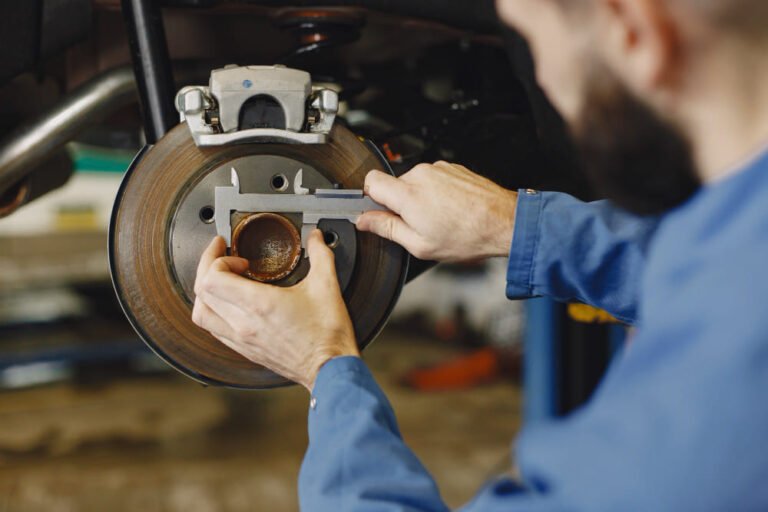
Brake Rotor Thickness Variation or Runout
Brake rotors must provide a consistent surface for the brake pads.
If rotor thickness varies or the rotor does not rotate correctly, braking forces may fluctuate and create pulsation or vibration.
Drivers may feel this through the brake pedal, steering wheel, or vehicle body.
Although this is often described as “warped rotors,” the actual cause may involve thickness variation, uneven pad deposits, runout, or other brake system conditions.
A technician can measure the components and determine whether resurfacing or replacement is appropriate.
Worn Brake Components
Brake pads, calipers, and other braking components can also contribute to vibration if they are damaged, worn unevenly, or not operating correctly.
A sticking caliper, for example, may cause uneven braking forces and excessive heat.
If shaking is accompanied by grinding noises, reduced braking performance, a burning smell, or the vehicle pulling during braking, the brake system should be inspected without delay.
Why Does My Car Shake When Accelerating?
Vibration that appears or becomes worse when accelerating may involve the engine, drivetrain, or components responsible for transferring power to the wheels.
Engine Performance Problems
Misfires, fuel delivery issues, and ignition problems can become more noticeable when the engine is under load.
A vehicle may idle reasonably well but hesitate or shake when accelerating because the engine requires more fuel and ignition energy.
Diagnostic testing can determine whether the vibration is related to engine performance.
Worn CV Axles or Drivetrain Components
Constant velocity joints and axles transfer power from the transmission to the wheels on many vehicles.
Worn or damaged drivetrain components may cause vibration during acceleration, sometimes accompanied by clicking or other noises.
The symptoms depend on the vehicle’s drivetrain configuration and the specific component involved.
Transmission or Driveline Problems
Certain transmission, driveshaft, or driveline issues can also produce vibration under load.
These problems may be accompanied by unusual shifting, clunking, or vibration that changes with acceleration.
Because drivetrain repairs can be complex, professional diagnosis is important before replacing components.
What Does the Location of the Vibration Mean?
The area where you feel the shaking can help narrow down the possible cause, although it is not a definitive diagnosis.
Shaking Through the Steering Wheel
Vibration felt primarily through the steering wheel may be associated with front tires, wheels, steering components, suspension, or front brake problems.
If it occurs only when braking, the braking system becomes a stronger area of suspicion.
Shaking Through the Seat or Floor
Vibration felt through the seat or floor may be associated with rear tires, wheels, drivetrain components, or other parts of the vehicle.
The speed and driving conditions under which it occurs help technicians determine where to begin testing.
Entire Vehicle Shaking at Idle
If the entire vehicle shakes while stopped, engine performance or engine mounts may be involved.
A rough-running engine, misfire, or worn mount can transmit vibration throughout the cabin.
When Is Car Shaking Dangerous?
Not every vibration indicates an immediate emergency, but certain symptoms require prompt attention.
If the shaking is sudden, severe, or accompanied by loss of steering control, significant braking problems, a flashing check engine light, overheating, or a visible tire defect, stop driving when it is safe to do so and arrange for professional assistance.
A vehicle that shakes mildly at a specific speed may still require service, but a sudden change in handling or severe vibration should not be ignored.
Continuing to drive with a damaged tire, failing suspension component, or serious brake problem can increase the risk of an accident or additional mechanical damage.
Can You Continue Driving With a Shaking Car?
The answer depends on the cause and severity of the vibration.
A minor tire imbalance may not require immediate roadside assistance, but it should still be corrected to prevent unnecessary tire wear and discomfort.
A severe engine misfire, damaged tire, loose steering component, or significant brake problem can present a much greater risk.
Because drivers cannot reliably identify the cause of every vibration without testing, scheduling an inspection is the safest approach when shaking is new, worsening, or persistent.
Why Car Shaking Problems Matter in Pompano Beach
Pompano Beach drivers experience a combination of local traffic, highway driving, high temperatures, and frequent stop-and-go conditions.
These conditions can make vehicle vibrations particularly noticeable, whether you are driving along local roads, commuting through Broward County, or traveling on I-95.
South Florida heat can also place additional demands on tires and engine components. Maintaining proper tire pressure, following scheduled maintenance, and addressing unusual vehicle behavior early can help reduce the risk of breakdowns.
Road hazards such as potholes and uneven pavement may also contribute to wheel, tire, or suspension damage.
How Does a Mechanic Diagnose Car Shaking?
A professional diagnosis begins by identifying exactly when and how the vibration occurs.
The technician may ask whether the vehicle shakes while idling, accelerating, braking, turning, or traveling at a particular speed.
A road test can help reproduce the symptoms and determine whether the vibration is related to engine speed, vehicle speed, braking, or drivetrain load.
Depending on the findings, the inspection may include tire and wheel evaluation, wheel balancing, suspension and steering checks, brake measurements, engine diagnostics, and drivetrain inspection.
The goal is to identify the actual cause rather than replacing parts based on assumptions.
Why Accurate Diagnosis Can Save Money
Vehicle vibration is a symptom, not a diagnosis.
For example, replacing tires may not solve a vibration caused by a bent wheel. Replacing spark plugs may not correct a rough idle caused by a vacuum leak. Installing new brake rotors may not permanently resolve a problem if another brake component is responsible.
A systematic inspection helps identify the root cause and prevents unnecessary repairs.
It also allows related problems to be addressed before they cause additional wear or damage.
How Much Does It Cost to Fix a Shaking Car in Pompano Beach?
The cost of repairing a shaking vehicle depends entirely on the underlying cause.
A wheel balancing service may be relatively straightforward, while repairs involving suspension components, engine mounts, ignition systems, fuel delivery, brakes, or drivetrain parts can require more extensive labor and replacement components.
Vehicle make, model, part accessibility, and the severity of the problem also influence pricing.
Because shaking can result from many different systems, a professional diagnostic inspection is the most accurate way to determine the necessary repair and provide a vehicle-specific estimate.
How to Prevent Vehicle Vibration Problems
Regular maintenance can help reduce the likelihood of many common vibration problems.
Tires should be maintained at the correct pressure and inspected for uneven wear or damage. Wheel alignment and balancing should be performed when necessary, particularly after tire replacement or when symptoms develop.
Following manufacturer recommendations for spark plugs, engine maintenance, and other scheduled services can help prevent certain engine performance problems.
Brake, suspension, and steering components should also be inspected periodically, especially as the vehicle accumulates mileage.
Addressing small problems early can help prevent them from developing into more expensive repairs.
Choosing a Mechanic for Car Shaking in Pompano Beach
When searching for a mechanic in Pompano Beach to diagnose vehicle shaking, choose a repair shop that evaluates the complete symptom rather than immediately recommending a specific repair.
A qualified technician should be able to distinguish between engine vibration, tire imbalance, brake pulsation, suspension problems, and drivetrain issues.
Clear communication is also important. The shop should explain what was found, which repairs are necessary, and how the recommended service addresses the original vibration.
Why Choose TS AutoCar in Pompano Beach?
TS AutoCar provides professional automotive diagnostics and repair for drivers throughout Pompano Beach.
With more than 20 years of automotive experience, our team understands that vehicle shaking can originate from several different systems. We focus on identifying the actual cause before recommending repairs.
Whether your vehicle is shaking at idle, vibrating at highway speeds, pulling during braking, or experiencing hesitation during acceleration, our approach is based on accurate diagnosis, transparent communication, and quality workmanship.
Our goal is to help drivers understand their vehicle’s condition and make informed decisions about the repairs needed to restore dependable performance.
Schedule a Car Shaking Inspection in Pompano Beach
If your car is shaking while driving or idling, do not wait for the problem to become more severe.
A professional inspection can determine whether the vibration is related to tires, wheels, brakes, suspension, engine performance, drivetrain components, or another system.
Contact TS AutoCar to schedule automotive diagnostics in Pompano Beach and get clear recommendations for restoring your vehicle’s comfort, safety, and reliability.
Frequently Asked Questions About Car Shaking
Why does my car shake when I am stopped?
Shaking while stopped may be caused by engine misfires, worn spark plugs, ignition coil problems, fuel delivery issues, vacuum leaks, or damaged engine mounts. Professional diagnosis is necessary to identify the exact cause.
Why does my car shake at highway speeds?
Vibration at highway speeds is commonly associated with tire imbalance, uneven tire wear, damaged wheels, or other rotating components. Suspension and drivetrain problems may also contribute.
Why does my steering wheel shake when I brake?
Steering wheel vibration during braking may be caused by brake rotor thickness variation, runout, uneven pad deposits, or other brake system problems. A brake inspection can determine the cause.
Can bad spark plugs make a car shake?
Yes. Worn or malfunctioning spark plugs can contribute to engine misfires, which may cause rough idling, hesitation, and vibration.
Can a bad engine mount cause shaking?
Yes. Worn engine mounts may allow normal engine vibration to transfer more noticeably into the vehicle’s cabin, especially while idling or shifting into gear.
Is it safe to drive a car that is shaking?
It depends on the cause. Mild vibration may indicate a less urgent issue, while severe shaking, damaged tires, steering problems, braking issues, or a flashing check engine light can require immediate attention.
How much does it cost to fix a shaking car?
Repair costs vary according to the cause, vehicle, parts, and labor requirements. A diagnostic inspection is necessary to determine whether the problem involves tires, brakes, engine components, suspension, or another system.
Can wheel alignment fix car shaking?
Alignment may help when vibration is related to alignment-induced tire wear or handling problems, but it will not correct every cause of shaking. Tire balancing, wheel damage, and other components should also be evaluated.
Conclusion
A car that shakes while driving or idling is communicating that something is not operating as smoothly as it should. The cause may be as simple as tire imbalance or as serious as an engine misfire, damaged suspension component, or brake problem.
Paying attention to when the vibration occurs is one of the best ways to narrow down the possibilities. Shaking at idle, during acceleration, at highway speeds, or while braking can each point toward different systems.
For drivers searching for car shaking repair in Pompano Beach, professional diagnosis is the most effective way to identify the underlying issue and avoid unnecessary repairs. TS AutoCar provides experienced automotive service focused on restoring reliable performance and helping keep your vehicle safe on South Florida roads.