Serpentine Belt Replacement in Pompano Beach: Symptoms and Why You Should Not Wait
The serpentine belt is one of the most important components under the hood of your vehicle. Although it may look like a simple rubber belt, it can be responsible for driving several essential accessories, including the alternator, air conditioning compressor, power steering pump on some vehicles, and sometimes the water pump. When the serpentine belt becomes worn, loose, damaged, or breaks completely, multiple vehicle systems can stop functioning at the same time.
For drivers searching for serpentine belt replacement in Pompano Beach, understanding the early warning signs is particularly important. South Florida’s heat, frequent air conditioning use, daily traffic, and demanding driving conditions make reliable vehicle maintenance essential. A worn belt that is ignored can eventually leave you stranded and, depending on the vehicle’s design, may contribute to battery charging problems or engine overheating.
The good news is that serpentine belt problems can often be identified before complete failure. Knowing what symptoms to watch for, when the belt should be inspected, and why related components such as tensioners and pulleys matter can help you avoid an unexpected breakdown.
What Is a Serpentine Belt?
A serpentine belt is a long, continuous belt located at the front or side of the engine, depending on the vehicle’s design. It runs around several pulleys and transfers rotational power from the engine’s crankshaft to various accessories.
Unlike older vehicles that often used several individual accessory belts, many modern vehicles use one serpentine belt to operate multiple systems.
The exact components driven by the belt vary from one vehicle to another, but they may include the alternator, air conditioning compressor, power steering pump, water pump, and other accessories.
Because one belt can operate several critical components, serpentine belt failure may affect multiple systems almost immediately.
Why the Serpentine Belt Is Important
Every time your engine runs, the serpentine belt is moving at high speed while exposed to heat, friction, tension, and constant bending around multiple pulleys.
Despite these demanding conditions, a healthy belt can provide reliable service for many thousands of miles. However, the material eventually deteriorates.
As the belt ages, it may lose flexibility, develop cracks, experience rib wear, become contaminated by engine fluids, or lose the ability to maintain proper contact with the pulleys.
Once deterioration becomes significant, the belt may slip or break.
A broken serpentine belt can immediately disable the alternator. If the belt also drives the water pump, coolant circulation may stop, causing the engine temperature to rise rapidly.
This is why serpentine belt replacement should be treated as preventive maintenance rather than something to consider only after the belt fails.
Common Symptoms of a Bad Serpentine Belt
A failing serpentine belt can produce several warning signs. Some are directly related to the belt, while others may be caused by the tensioner, pulleys, or accessories connected to the belt system.
Squealing or Chirping Noise From the Engine
One of the most recognizable symptoms is a squealing or chirping noise coming from the engine compartment.
The sound may be especially noticeable when starting the engine, accelerating, turning on the air conditioning, or placing additional electrical demand on the alternator.
Belt noise can result from insufficient tension, contamination, pulley misalignment, belt wear, or a failing tensioner.
Simply replacing the belt may not solve the problem if another component is responsible. A professional inspection should evaluate the complete belt drive system.
Visible Cracks or Belt Damage
Visible deterioration is another reason to have the belt inspected.
Depending on belt design and age, technicians may look for damaged ribs, missing sections, frayed edges, glazing, contamination, material loss, or other evidence of deterioration.
Modern belt materials do not always develop obvious cracks before reaching the end of their useful service life. This means visual inspection should be combined with the manufacturer’s recommendations and professional evaluation.
Battery Warning Light
Your alternator is commonly driven by the serpentine belt.
If the belt slips significantly or breaks, the alternator may stop producing sufficient electricity. When this happens, the battery or charging system warning light may appear on the dashboard.
The vehicle will then begin operating using electrical energy stored in the battery. Once that energy is depleted, the engine may shut down and fail to restart.
A battery warning light can have many causes, including alternator failure, so proper diagnosis is necessary.
Air Conditioning Stops Working Properly
In many vehicles, the serpentine belt drives the air conditioning compressor.
If the belt is slipping, damaged, or broken, the compressor may not operate correctly. You may notice that the AC suddenly stops cooling or behaves differently than usual.
For drivers in Pompano Beach, where air conditioning is used extensively throughout the year, a sudden AC problem may justify checking both the AC system and the accessory belt drive.
Engine Temperature Begins to Rise
Some engines use the serpentine belt to operate the water pump.
If the belt breaks on one of these vehicles, the water pump can stop circulating coolant through the engine and radiator. The engine may then overheat very quickly.
Driving an overheating vehicle can cause serious damage, including cylinder head distortion, head gasket failure, and other internal engine problems.
If your temperature gauge rises unexpectedly, stop driving when it is safe to do so and have the vehicle inspected.
Steering Suddenly Feels Heavy
Vehicles with a belt-driven hydraulic power steering pump may experience a sudden increase in steering effort if the serpentine belt breaks.
The steering wheel can become considerably harder to turn, particularly at lower speeds.
Many newer vehicles use electric power steering and will not experience this specific symptom from serpentine belt failure. The effect depends entirely on the vehicle’s design.
Burning Rubber Smell
A slipping belt creates friction and heat.
If the belt is misaligned, improperly tensioned, or rubbing against another component, you may notice a burning rubber smell from the engine compartment.
This symptom should not be ignored. Continued friction can damage the belt and increase the likelihood of complete failure.
What Causes a Serpentine Belt to Fail?
Serpentine belts are designed to withstand demanding operating conditions, but several factors can accelerate deterioration.
Normal Age and Mileage
Normal wear is one of the most common reasons serpentine belts require replacement.
Every engine revolution forces the belt to bend around multiple pulleys while transmitting power to accessories. Over years of use, the belt material naturally deteriorates.
The correct inspection and replacement recommendations depend on the vehicle and belt design rather than one universal mileage interval.
High Engine Compartment Temperatures
Heat is a constant challenge for rubber and synthetic components.
Vehicles operating in Pompano Beach are regularly exposed to high ambient temperatures, while the engine itself generates substantial additional heat.
Modern serpentine belts are engineered for these conditions, but repeated heat cycles still contribute to normal aging.
Faulty Belt Tensioner
The tensioner helps maintain the correct amount of pressure on the serpentine belt.
If the tensioner becomes weak, worn, or damaged, the belt may become too loose. This can cause slipping, noise, reduced accessory performance, and accelerated belt wear.
A seized or damaged tensioner can also contribute to sudden belt failure.
Damaged or Misaligned Pulley
The serpentine belt travels across several pulleys. Each one must rotate smoothly and remain properly aligned.
A damaged bearing, bent pulley, or alignment problem can cause abnormal belt wear.
If a replacement belt is installed without correcting a pulley problem, the new belt may fail prematurely.
Oil or Coolant Contamination
Engine oil, coolant, and other automotive fluids can damage the belt or interfere with its ability to grip the pulleys correctly.
If the belt is contaminated because of an engine leak, simply replacing it without fixing the leak may lead to another failure.
A complete inspection should identify both the damaged belt and the reason it became contaminated.
How Often Should a Serpentine Belt Be Replaced?
There is no single replacement interval that applies to every vehicle.
Serpentine belt lifespan depends on belt material, vehicle design, manufacturer specifications, engine operating conditions, age, and mileage.
Modern EPDM belts can often last considerably longer than older belt designs, which is one reason relying solely on traditional visual crack inspection may not accurately indicate belt condition.
The best approach is to follow your vehicle manufacturer’s maintenance recommendations and have the belt inspected during routine service.
If you purchased a used vehicle without complete maintenance records, asking a technician to inspect the accessory belt system is a practical way to establish its current condition.
Serpentine Belt vs. Timing Belt: What Is the Difference?
Drivers sometimes confuse the serpentine belt with the timing belt, but these components perform very different functions.
The serpentine belt drives external engine accessories such as the alternator and air conditioning compressor.
The timing belt, when used, synchronizes internal engine components by coordinating crankshaft and camshaft movement.
Timing belt failure can cause severe internal engine damage in certain engines. Serpentine belt failure usually affects accessories, although it can still lead to serious consequences if the belt drives the water pump or causes another mechanical problem.
Some vehicles use timing chains instead of timing belts, but most still have some form of accessory drive system.
Understanding the difference helps ensure the correct maintenance service is performed.
What Happens If the Serpentine Belt Breaks While Driving?
The exact consequences depend on which components the belt drives.
If the alternator stops turning, the battery will no longer receive normal charging. Dashboard warning lights may appear, electrical systems may begin behaving abnormally, and eventually the vehicle may shut down.
If the belt drives the water pump, engine overheating can develop rapidly.
If the vehicle uses belt-driven hydraulic power steering, steering effort can increase substantially.
The air conditioning compressor may also stop operating.
Because several systems can be affected simultaneously, continuing to drive after suspected serpentine belt failure is generally not advisable.
Move the vehicle to a safe location when possible and arrange for professional assistance.
Can You Drive With a Squealing Serpentine Belt?
A squealing belt does not necessarily mean immediate belt failure, but the noise should not be ignored.
The sound may indicate belt wear, insufficient tension, pulley misalignment, contamination, or a failing bearing.
Continuing to drive without identifying the cause creates unnecessary risk because a minor belt drive problem can eventually develop into a breakdown.
Professional diagnosis can determine whether the belt itself requires replacement or whether another component is causing the noise.
Why Serpentine Belt Maintenance Matters in Pompano Beach
Pompano Beach driving conditions make reliable accessory operation particularly important.
Air conditioning systems are frequently used because of South Florida’s heat and humidity. The alternator must continuously support the vehicle’s electrical systems while also maintaining battery charge.
Heavy traffic and extended idling can keep the engine and accessories operating for long periods even when relatively few miles are being added to the odometer.
South Florida heat also increases the importance of a reliable cooling system. On vehicles where the serpentine belt drives the water pump, belt failure can quickly become an overheating problem.
Regular inspections can help identify belt drive issues before they result in a roadside breakdown.
What Happens During a Professional Serpentine Belt Inspection?
A proper inspection should evaluate more than the belt alone.
The technician examines the belt for wear, contamination, damaged ribs, material deterioration, and other visible concerns. Belt alignment and tension should also be evaluated.
The tensioner and pulleys may be inspected for excessive movement, bearing noise, misalignment, or resistance.
Accessories driven by the belt may also require evaluation if abnormal noise or belt wear suggests another component is creating excessive resistance.
This complete approach is important because replacing only the belt may not solve a problem caused by a failing tensioner, pulley, or accessory.
What Happens During Serpentine Belt Replacement?
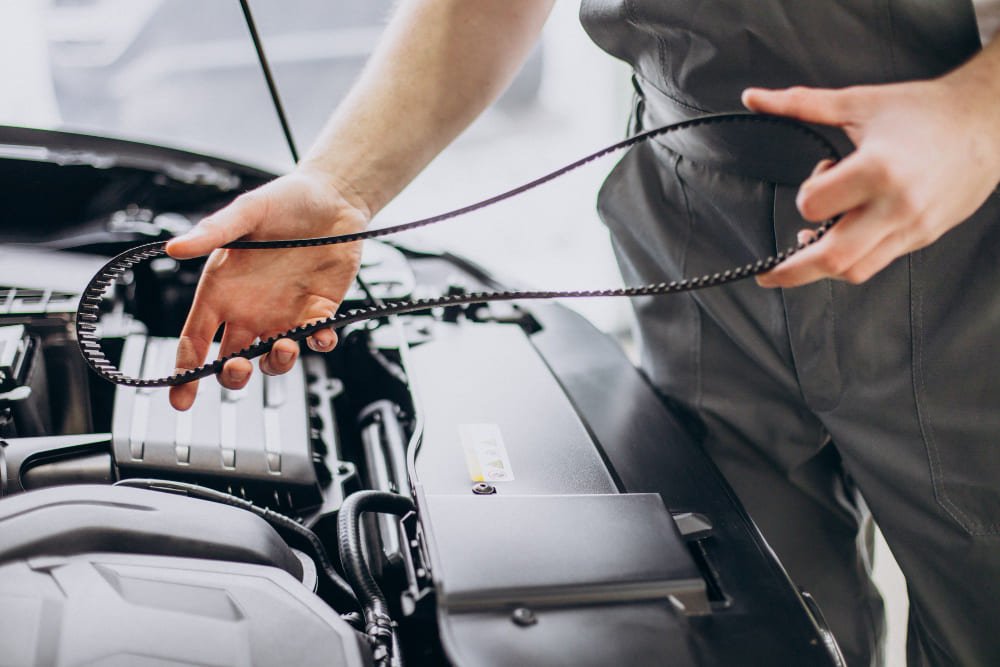
Once replacement is recommended, the technician identifies the correct belt routing and releases tension from the belt drive system.
The old belt is removed, allowing the pulleys, tensioner, and accessible components to be inspected more closely.
The replacement belt must match the correct specifications for the vehicle. It is then routed around each pulley according to the manufacturer’s configuration.
After installation, proper seating and alignment are verified. The engine can then be started so technicians can confirm that the belt tracks correctly and that abnormal noises are no longer present.
Although the process may appear simple on some vehicles, proper routing and tension are essential for reliable operation.
Should the Belt Tensioner Be Replaced at the Same Time?
Not automatically.
A tensioner should be evaluated based on its condition, vehicle manufacturer recommendations, mileage, and the reason for the original belt problem.
If the tensioner is weak, noisy, damaged, or unable to maintain proper belt tension, replacing it may be necessary.
Installing a new serpentine belt with a defective tensioner can lead to noise, slipping, premature wear, or another belt failure.
The same principle applies to idler pulleys and other belt drive components.
A professional inspection should determine which parts actually require replacement.
How Much Does Serpentine Belt Replacement Cost in Pompano Beach?
The cost of serpentine belt replacement in Pompano Beach varies depending on vehicle make, model, engine design, belt accessibility, replacement part specifications, and labor requirements.
Some vehicles have easily accessible belts that can be replaced relatively quickly. Others have limited engine compartment space or require additional components to be removed for access.
The total repair cost can also increase if the inspection identifies a worn tensioner, damaged pulley, leaking component, or another accessory drive problem.
For this reason, a vehicle-specific inspection and estimate provide more useful information than a generic serpentine belt replacement price.
A reputable auto repair shop should explain exactly which components need attention and provide clear pricing before performing the repair.
Why You Should Not Wait to Replace a Worn Serpentine Belt
Postponing serpentine belt replacement can turn a relatively straightforward maintenance service into a roadside emergency.
A worn belt may continue operating normally until it slips or breaks. Once failure occurs, you may lose alternator operation, air conditioning, belt-driven power steering, or water pump operation depending on the vehicle.
The resulting consequences can include a dead battery, overheating, difficult steering, or a vehicle that can no longer be driven safely.
Replacing a worn belt before failure is generally far more convenient than arranging towing and emergency repairs after a breakdown.
How to Help Extend Serpentine Belt Life
Serpentine belt life depends heavily on the condition of the entire accessory drive system.
Following manufacturer maintenance recommendations is the first step. The belt should be inspected periodically, particularly as the vehicle ages.
Oil and coolant leaks should be repaired promptly so they do not contaminate the belt.
Unusual noises should also be investigated rather than ignored. A failing pulley or tensioner can damage an otherwise healthy belt.
Maintaining the charging, cooling, and air conditioning systems can also help identify accessory problems that may affect belt operation.
Choosing Serpentine Belt Replacement in Pompano Beach
When searching for serpentine belt replacement in Pompano Beach, choose a repair shop that evaluates the entire belt drive system rather than simply installing a new belt.
The technician should determine why replacement is necessary and inspect related components for problems that could shorten the life of the new belt.
Clear communication is also important. Customers should understand whether the recommendation is based on normal belt wear, contamination, a damaged tensioner, pulley problems, or another mechanical issue.
Accurate diagnosis helps prevent unnecessary repairs while reducing the likelihood of repeated belt problems.
Why Choose TS AutoCar for Serpentine Belt Replacement in Pompano Beach?
TS AutoCar was founded with a commitment to reliable automotive repair, honest recommendations, transparent communication, and quality workmanship.
With more than 20 years of automotive experience, our team understands that a worn serpentine belt can sometimes be the symptom of a larger accessory drive problem. That is why proper inspection is important before replacing components.
Our technicians can inspect the serpentine belt, tensioner, pulleys, charging system, and related components to identify the source of abnormal wear, noise, or performance problems.
If serpentine belt replacement is necessary, we explain the service clearly so you understand what your vehicle needs and why.
For drivers looking for professional auto repair in Pompano Beach, our goal is to provide dependable service that helps keep vehicles safe, reliable, and properly maintained.
Schedule Serpentine Belt Replacement in Pompano Beach
Do not wait for your serpentine belt to break before having it inspected.
If you notice squealing or chirping noises, visible belt damage, charging system warnings, changes in air conditioning performance, or other symptoms related to the accessory drive system, schedule a professional inspection.
If your vehicle has accumulated significant mileage or you do not know when the serpentine belt was last inspected or replaced, preventive evaluation can also help identify deterioration before failure.
Contact TS AutoCar for professional serpentine belt replacement in Pompano Beach and get accurate diagnostics, transparent recommendations, and reliable automotive service.
Frequently Asked Questions About Serpentine Belt Replacement
What are the most common signs of a bad serpentine belt?
Common symptoms can include squealing or chirping noises, visible belt deterioration, charging system problems, loss of air conditioning compressor operation, increased steering effort on vehicles with belt-driven hydraulic power steering, or overheating when the belt drives the water pump.
How often should a serpentine belt be replaced?
There is no universal replacement interval. Belt life varies according to vehicle manufacturer, belt design, operating conditions, age, and mileage. Follow the manufacturer’s maintenance recommendations and have the belt inspected during routine service.
Can a bad serpentine belt cause the battery light to come on?
Yes. Because the serpentine belt commonly drives the alternator, severe belt slipping or breakage can prevent normal alternator operation and trigger the battery or charging system warning light.
Can a broken serpentine belt cause engine overheating?
It can on vehicles where the serpentine belt drives the water pump. If the water pump stops circulating coolant, engine temperature can increase rapidly.
Is a serpentine belt the same as a timing belt?
No. A serpentine belt powers external accessories, while a timing belt synchronizes internal engine components. They serve completely different purposes and have different maintenance requirements.
Why does my serpentine belt squeal when I start the car?
Squealing may be caused by belt wear, improper tension, contamination, pulley misalignment, or problems with the tensioner or another accessory. Inspection is necessary to identify the exact cause.
Should I replace the tensioner when replacing the serpentine belt?
Only when its condition or manufacturer recommendations justify replacement. A worn or damaged tensioner should not be reused simply because a new belt is being installed.
What happens if I keep driving with a worn serpentine belt?
The belt may eventually slip or break. Depending on the vehicle, this can cause loss of alternator charging, air conditioning, hydraulic power steering, or water pump operation. The vehicle may eventually become undrivable.
Conclusion
The serpentine belt plays a central role in operating several important vehicle systems. Although it is designed for durability, continuous exposure to heat, tension, friction, and engine operation eventually causes wear.
Recognizing symptoms such as squealing noises, belt deterioration, charging system warnings, AC problems, or unexpected temperature changes can help identify accessory drive problems before complete failure.
For drivers searching for serpentine belt replacement in Pompano Beach, preventive inspection is especially valuable because a broken belt can affect multiple systems at once and leave your vehicle stranded.
Following manufacturer maintenance recommendations, addressing unusual noises early, repairing fluid leaks, and having the complete belt drive system inspected can help protect your vehicle from avoidable breakdowns. When replacement becomes necessary, TS AutoCar provides professional diagnosis and reliable serpentine belt service for drivers throughout Pompano Beach.